
Your Grocery Bill Doesn’t Have to Break the Bank
Let me guess—you walked into the grocery store planning to spend $100, and somehow walked out $80 over budget? Yeah, we’ve all been there.
Here’s the truth: groceries are one of the biggest monthly expenses for most families. The average American household spends between $600-$1,200 per month on food. That’s a car payment!
But here’s the good news—you don’t need extreme couponing skills or to eat ramen every night to save serious money on groceries. With a few simple strategies, you can easily cut your grocery bill by 30-50% without sacrificing quality or taste.
In this article, I’m sharing 7 proven ways to save money on groceries that actually work in real life. These aren’t crazy hacks or things that take hours of prep time. They’re practical, sustainable strategies you can start using today.
Ready to keep more money in your pocket? Let’s go.
Why Your Grocery Bill Is So High (And It’s Not Your Fault)
Before we dive into the solutions, let’s talk about why groceries feel so expensive:
Grocery stores are designed to make you spend more. That’s not a conspiracy theory—it’s marketing 101.
- Eye-level products are usually the most expensive
- Impulse items are strategically placed at checkout
- Sale signs don’t always mean real savings
- Pleasant music and lighting make you shop longer (and buy more)
The industry calls it “retail psychology,” but you can call it what it is: tricks to empty your wallet.
But once you understand the game, you can play it smarter. And that’s exactly what we’re going to do.
1. Always Shop With a Meal Plan (And Stick to It)
The Problem
Walking into a grocery store without a plan is like going to the casino and hoping you’ll come out ahead. Spoiler: the house always wins.
When you shop without a meal plan, you:
- Buy random items that don’t make complete meals
- Waste food because ingredients go bad before you use them
- End up ordering takeout because “there’s nothing to eat”
- Impulse buy things you don’t really need
The Solution
Meal planning saves you money, time, and stress. Here’s how to do it:
Step 1: Plan Your Week
- Choose 5-7 dinners for the week
- Pick recipes that use overlapping ingredients (save money + reduce waste)
- Include one “leftover night” and one “easy night” (pasta, sandwiches)
Step 2: Check What You Already Have
Before making your list, check your pantry, fridge, and freezer. You’d be surprised what’s hiding in there.
Step 3: Make Your Shopping List
Write down ONLY what you need for your planned meals, plus household staples.
Step 4: Stick to the List
This is the hardest part, but it’s where the magic happens. If it’s not on the list, it doesn’t go in the cart.
Real Results
A study by the USDA found that meal planning reduces food waste by 40% and grocery spending by 25%.
That means if you’re spending $800/month on groceries, meal planning alone could save you $200/month—that’s $2,400 per year!
Need help getting started? Download our Ultimate Meal Planning Template with 30 budget-friendly recipes, shopping list organizer, and weekly meal planner. It’s like having a personal chef (but way cheaper).
2. Master the Art of Strategic Shopping
Shop the Perimeter First
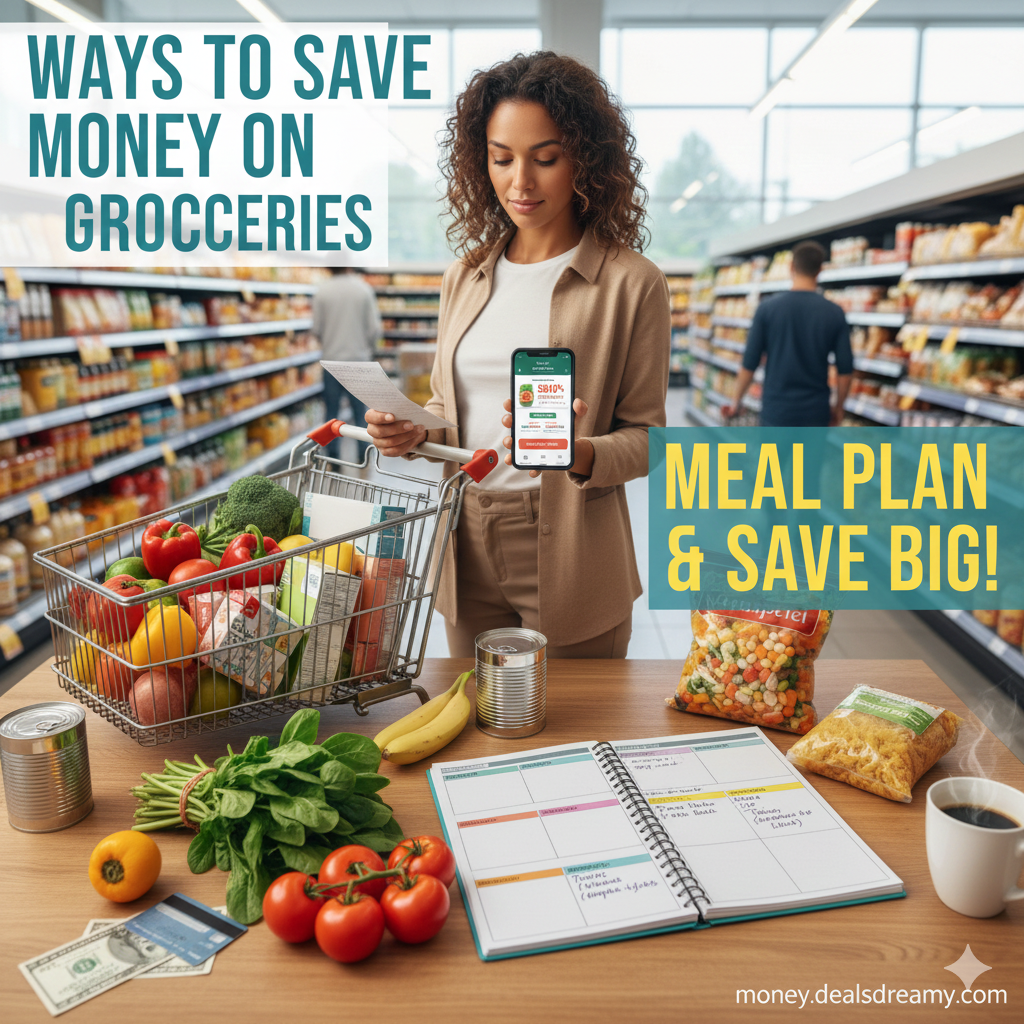
Here’s a grocery store secret: the healthiest and cheapest foods are usually on the outer edges of the store.
Why? Because that’s where the fresh, whole foods live:
- Produce
- Meat and seafood
- Dairy
- Bread
The middle aisles? That’s where the processed, marked-up stuff hangs out.
Start at the perimeter, fill your cart with whole foods, then strategically hit the middle aisles only for specific items on your list.
Never Shop Hungry
I know, I know—you’ve heard this a million times. But there’s actual science behind it.
Studies show that hungry shoppers spend 60% more than those who shop on a full stomach. Your brain literally craves high-calorie foods when you’re hungry, making those impulse buys way more tempting.
Pro tip: Eat a protein-rich snack (apple with peanut butter, handful of nuts) 30 minutes before shopping.
Choose the Right Time
Shopping during peak hours (weekends, evenings) means:
- More crowds and stress
- More impulse buying
- Longer checkout lines (more time near impulse items)
Best times to shop:
- Tuesday or Wednesday mornings
- Late evening (fewer crowds, some stores mark down items about to expire)
Compare Unit Prices, Not Package Prices
Bigger isn’t always cheaper. Grocery stores know you assume bulk = savings, so they price things accordingly.
Always check the unit price (price per ounce, pound, or item) on the shelf tag. It’s usually in smaller print below the main price.
Sometimes the smaller package is actually the better deal—especially on sale items.
3. Embrace Generic and Store Brands
The Truth About Store Brands
Let me blow your mind: most store brands are made by the same manufacturers as name brands.
Seriously. The only difference is the label and the price tag.
Common examples:
- Store-brand cereal is often made by General Mills or Kellogg’s
- Generic paper products come from the same factories as Bounty and Charmin
- Store-brand medications have the exact same active ingredients as name brands (it’s FDA-regulated)
Where to Go Generic
Always buy generic:
- Baking staples (flour, sugar, baking soda)
- Canned goods (beans, tomatoes, vegetables)
- Pasta and rice
- Frozen vegetables and fruits
- Spices
- Paper products and cleaning supplies
- Over-the-counter medications
When name brand might be worth it:
- Certain condiments (ketchup, mayo—but try the generic first)
- Paper towels (if you prefer ultra-absorbent)
- Specific dietary needs or allergies
The Savings Add Up
Switching to store brands can save you 20-40% on your grocery bill with zero difference in quality.
If you spend $200/week on groceries, that’s $40-80 saved per week just by switching labels. That’s $2,080-$4,160 per year!
4. Use Technology to Find the Best Deals
Best Money-Saving Apps
Gone are the days of clipping coupons from the Sunday paper. Welcome to 2026, where your phone does the work for you.
Top grocery apps:
Ibotta
- Get cashback on groceries you already buy
- Earn $10-30/month on average
- Works at most major stores
Fetch Rewards
- Scan any receipt, earn points
- Redeem for gift cards
- Super easy, no pre-selecting offers
Flipp
- See weekly ads from all local stores in one app
- Create shopping lists
- Match sales with coupons
Store Apps (Target, Kroger, Safeway, etc.)
- Digital coupons (load once, auto-apply at checkout)
- Exclusive member pricing
- Personalized deals based on your shopping
Stack Your Savings
Here’s where it gets really good: combine multiple strategies for maximum savings.
Example:
- Check store app for digital coupons
- Buy sale items
- Scan receipt in Ibotta or Fetch
- Pay with a cashback credit card
Result: You could save 40-60% on specific items just by layering these deals.
Price Matching
Many stores (Walmart, Target) will match competitors’ advertised prices. Just show them the ad (or pull it up on your phone) at checkout.
No need to drive to multiple stores—bring the deals to you.
5. Buy in Bulk (But Only the Right Things)
When Bulk Buying Saves Money
Bulk buying works when:
- You’ll actually use it before it expires
- It’s significantly cheaper per unit
- You have storage space
- It’s a non-perishable staple
Best things to buy in bulk:
- Rice, pasta, oats
- Canned goods
- Frozen meats (portion and freeze)
- Toilet paper, paper towels
- Cleaning supplies
- Spices (from bulk bins, not those tiny jars)
- Coffee and tea
When Bulk Buying Wastes Money
Don’t buy in bulk:
- Fresh produce (unless you have a specific plan to use it)
- Bread (gets stale or moldy)
- Trendy foods you haven’t tried yet
- Anything on impulse
The golden rule: If you throw away even 10% of a bulk purchase, you didn’t save money—you wasted it.
Wholesale Clubs: Worth It?
Costco, Sam’s Club, and BJ’s can save you money, but only if you shop smart.
Membership costs $60-120/year, so you need to save at least that much to break even.
Best deals at warehouse clubs:
- Gas (often 10-30 cents cheaper per gallon)
- Rotisserie chicken
- Butter and cheese
- Diapers and baby formula
- OTC medications
Not worth it:
- Fresh produce (too much, goes bad)
- Trendy items
- Things you don’t regularly use
Pro tip: Split a membership with a family member or friend to cut the cost in half.
6. Reduce Food Waste (It’s Like Finding Free Money)
The Shocking Truth About Food Waste
The average family throws away $1,500 worth of food every year. That’s not a typo.
Think about it: that’s a vacation, a car repair, or a nice chunk of your emergency fund—literally thrown in the trash.
The biggest culprits:
- Produce that goes bad
- Leftovers forgotten in the fridge
- Impulse purchases that never get used
- Overly ambitious meal planning
How to Stop Wasting Food (and Money)
Use the “First In, First Out” Method
When you unload groceries, move older items to the front and put new items in back. Eat the older stuff first.
Designate a “Use It Up” Night
Once a week, make a meal using whatever needs to be eaten before it goes bad. Get creative—it’s like a cooking challenge.
Freeze Strategically
- Bread going stale? Freeze it.
- Bananas getting brown? Freeze for smoothies.
- Leftover herbs? Chop and freeze in olive oil (ice cube trays work great)
- Cooked too much? Portion and freeze for easy future meals.
Master Leftovers
Don’t let leftovers die in the fridge. Give them a new identity:
- Roasted chicken → chicken salad or tacos
- Roasted vegetables → frittata or pasta
- Rice → fried rice or rice bowls
Keep a “Eat Me First” Box
Use a clear container or section in your fridge for items that need to be eaten ASAP. Check it daily.
The Money Impact
Cut your food waste in half, and you save $750/year. That’s real money back in your pocket.
Want a foolproof system? Get our Zero-Waste Kitchen Guide with food storage hacks, meal prep strategies, and 50+ “use it up” recipes. Stop throwing money in the trash.
7. Cook at Home More Often
The Restaurant Trap
I get it—cooking feels like work after a long day. But here’s the math:
Restaurant meal: $12-20 per person
Home-cooked meal: $3-6 per person
If a family of four eats out twice a week instead of cooking at home, that’s $100-200+ per week or $5,000-10,000+ per year down the drain.
Make Cooking Easier, Not Perfect
You don’t need to be a chef. You just need a few simple, fast recipes you can make on autopilot.
Quick weeknight meal ideas (30 minutes or less):
- Pasta with marinara and ground beef
- Stir fry (use frozen vegetables and a store-bought sauce)
- Sheet pan dinners (protein + veggies, roast together)
- Tacos or burrito bowls
- Breakfast for dinner (eggs are cheap and fast)
Batch Cooking Saves Time and Money
Spend 1-2 hours on Sunday making:
- A big pot of rice or pasta
- Grilled chicken breasts or ground beef
- Chopped vegetables
- A large salad
Mix and match throughout the week for easy meals. You’ll eat healthier AND save money.
Budget-Friendly Ingredients
Proteins:
- Eggs (about $0.20 each)
- Dried beans (pennies per serving)
- Whole chicken (cheaper than parts)
- Canned tuna
Carbs:
- Rice ($0.10-0.20 per serving)
- Pasta ($0.25 per serving)
- Potatoes ($0.50-1.00 per pound)
- Oats ($0.05 per serving)
Vegetables:
- Frozen vegetables (just as nutritious as fresh, way cheaper)
- Seasonal produce
- Cabbage, carrots, onions (cheap and last forever)
You can make a delicious, filling meal for a family of four for under $10. Try doing that at a restaurant.
How Much Can You Actually Save?
Let’s do the math. If you implement all 7 strategies:
| Strategy | Monthly Savings |
|---|---|
| Meal planning | $60-100 |
| Strategic shopping | $40-60 |
| Store brands | $50-80 |
| Apps and deals | $30-50 |
| Smart bulk buying | $30-40 |
| Reduce food waste | $60-80 |
| Cook at home more | $150-300 |
| TOTAL | $420-710/month |
That’s $5,000-8,500 per year staying in your bank account instead of going to grocery stores and restaurants.
Imagine what you could do with an extra $5,000-8,500:
- Pay off credit card debt
- Build a solid emergency fund
- Take a family vacation
- Max out your IRA
- Finally start that side business
The money is already there—you’re just spending it on groceries.
Start Small: Your 30-Day Challenge
Feeling overwhelmed? Don’t try to do everything at once. Here’s a simple plan:
Week 1: Meal Plan and Make a List
Just focus on planning meals and shopping with a list. Nothing else.
Week 2: Add Generic Brands
Switch to store brands for 5-10 items.
Week 3: Download One App
Pick one cashback app and start using it.
Week 4: Cook at Home 5 Nights
Challenge yourself to skip takeout for 5 dinners this week.
By the end of the month, these habits will feel natural. And your bank account will thank you.
Common Mistakes to Avoid
Mistake #1: Buying “Deals” You Don’t Need
A sale is only a good deal if you were going to buy it anyway. Ten boxes of cereal at 50% off is still a waste if you only eat two boxes a month.
Mistake #2: Shopping at Too Many Stores
Driving to 4 different stores to save $5 wastes time and gas money. Pick 1-2 main stores and stick with them.
Mistake #3: Not Tracking Your Spending
You can’t improve what you don’t measure. Keep your grocery receipts for a month and see where your money actually goes.
Mistake #4: Giving Up Too Soon
It takes 3-4 weeks to see real results. Stick with it—the savings compound over time.
Your Next Steps
Here’s what to do right now:
- Check your bank statements. How much did you spend on groceries last month? Write it down.
- Pick ONE strategy from this list to implement this week.
- Plan your meals for the next 7 days (even if they’re simple).
- Make your shopping list based on those meals.
- Track your progress. After one month, compare your new spending to your old spending.
You’ve got this. Thousands of families have used these exact strategies to cut their grocery bills in half—and you can too.
Final Thoughts
Saving money on groceries isn’t about deprivation or eating boring food. It’s about being intentional with your money and shopping smarter, not harder.
Every dollar you save on groceries is a dollar you can put toward your real goals—whether that’s getting out of debt, building wealth, or just having more breathing room in your budget.
The grocery stores have had the upper hand for too long. It’s time to take control.
Ready to master your grocery budget once and for all? Get our Complete Grocery Savings Toolkit with meal planning templates, shopping list organizers, recipe guides, and money-saving checklists. Everything you need to save $500+ per month. Just $19 (one-time).
Frequently Asked Questions
How much should I spend on groceries per month?
The USDA recommends $200-300 per person per month for a moderate plan. For a family of four, that’s $800-1,200/month. But you can easily spend less with these strategies.
Is organic worth the extra cost?
It depends. For produce on the “Dirty Dozen” list (strawberries, spinach, apples), organic reduces pesticide exposure. For items on the “Clean 15” (avocados, corn, pineapple), conventional is fine. Buy organic selectively, not across the board.
Can I save money AND eat healthy?
Absolutely. Frozen vegetables, dried beans, oats, eggs, and seasonal produce are all cheap AND nutritious. Junk food is actually more expensive per calorie than whole foods.
What if my family won’t eat leftovers?
Repackage them creatively. Leftover taco meat becomes nachos or a taco salad. Roasted chicken becomes chicken salad sandwiches. Make it feel like a new meal.
How do I resist impulse buys?
Shop with a list, avoid shopping hungry, and use the “24-hour rule”—if you want something not on your list, wait 24 hours before buying it. The urge usually passes.
Your grocery budget doesn’t control you—you control it. Start today and watch the savings add up.
Want more money-saving tips? Subscribe to our newsletter for weekly strategies on saving smarter, spending less, and building real wealth.
Tags: save money on groceries, grocery budget, meal planning, frugal living, money saving tips, reduce food waste, budget-friendly meals
Internal Links:
External Links: